
Description
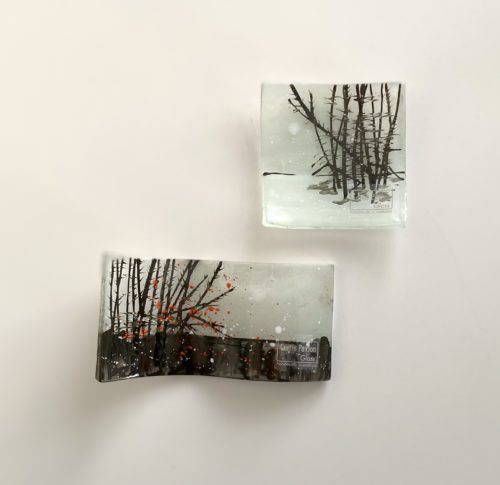
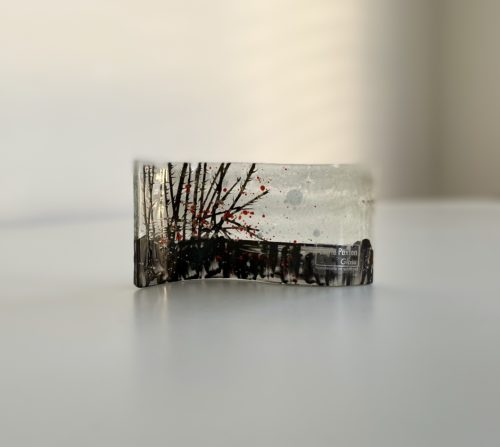
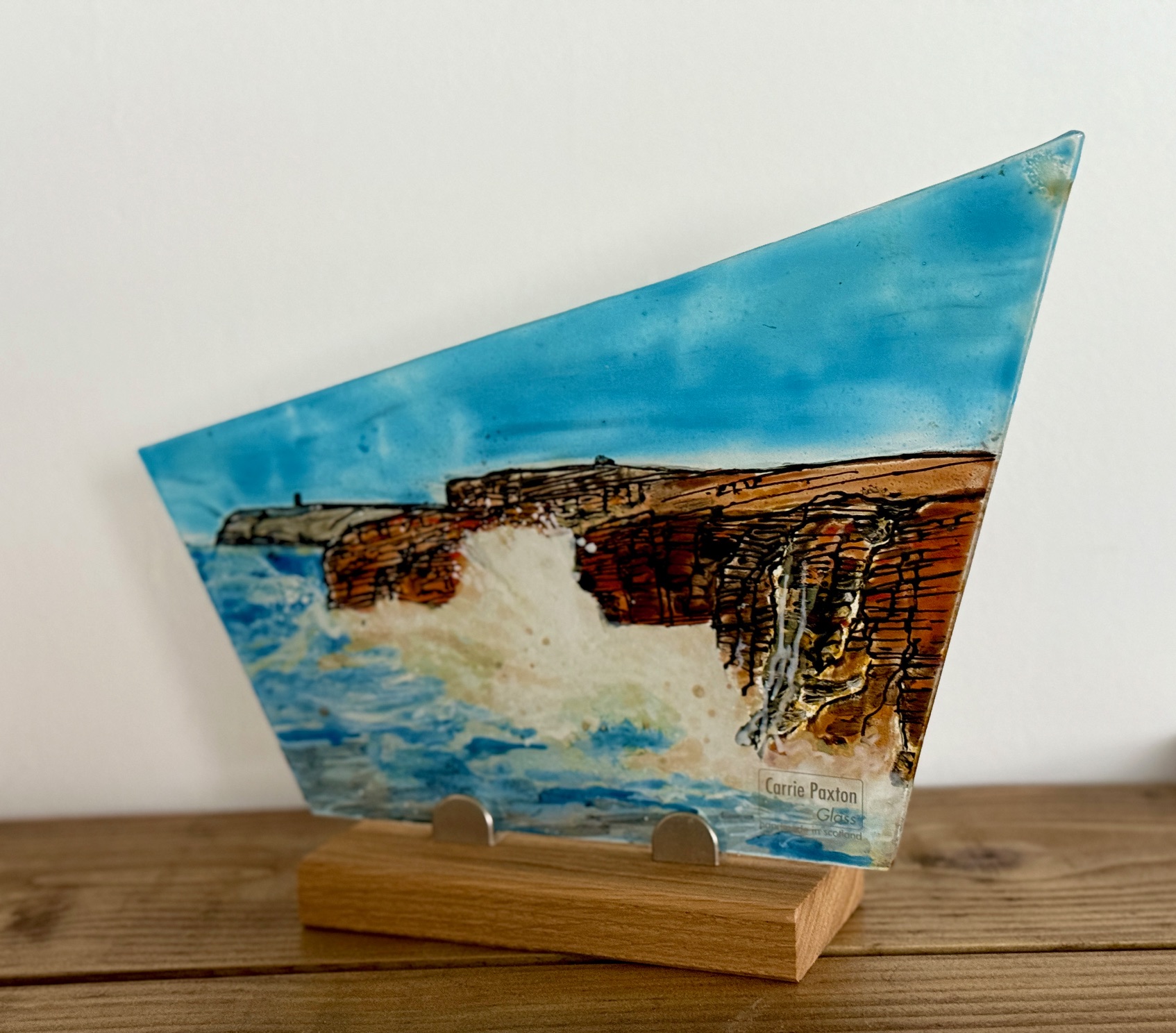
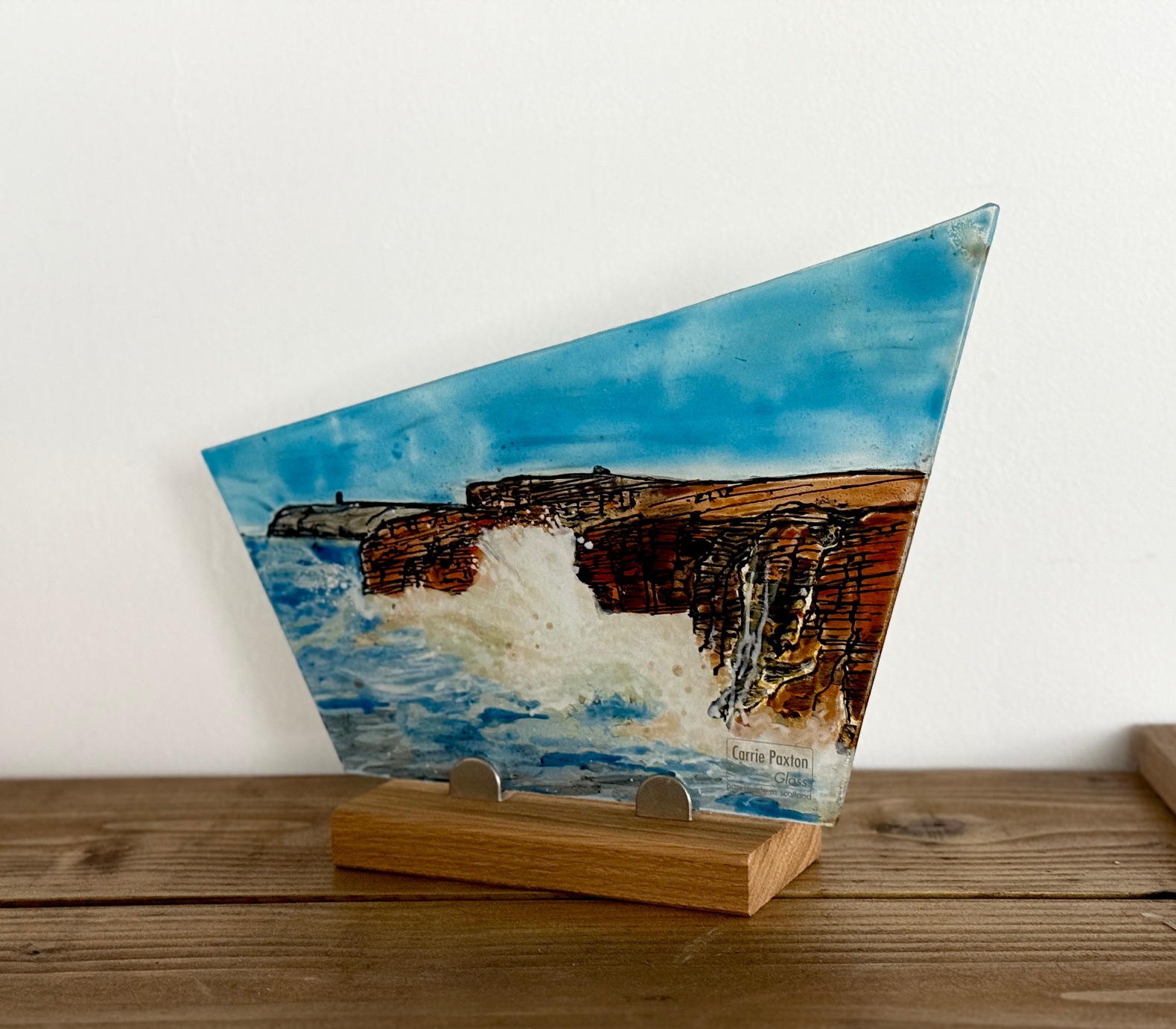
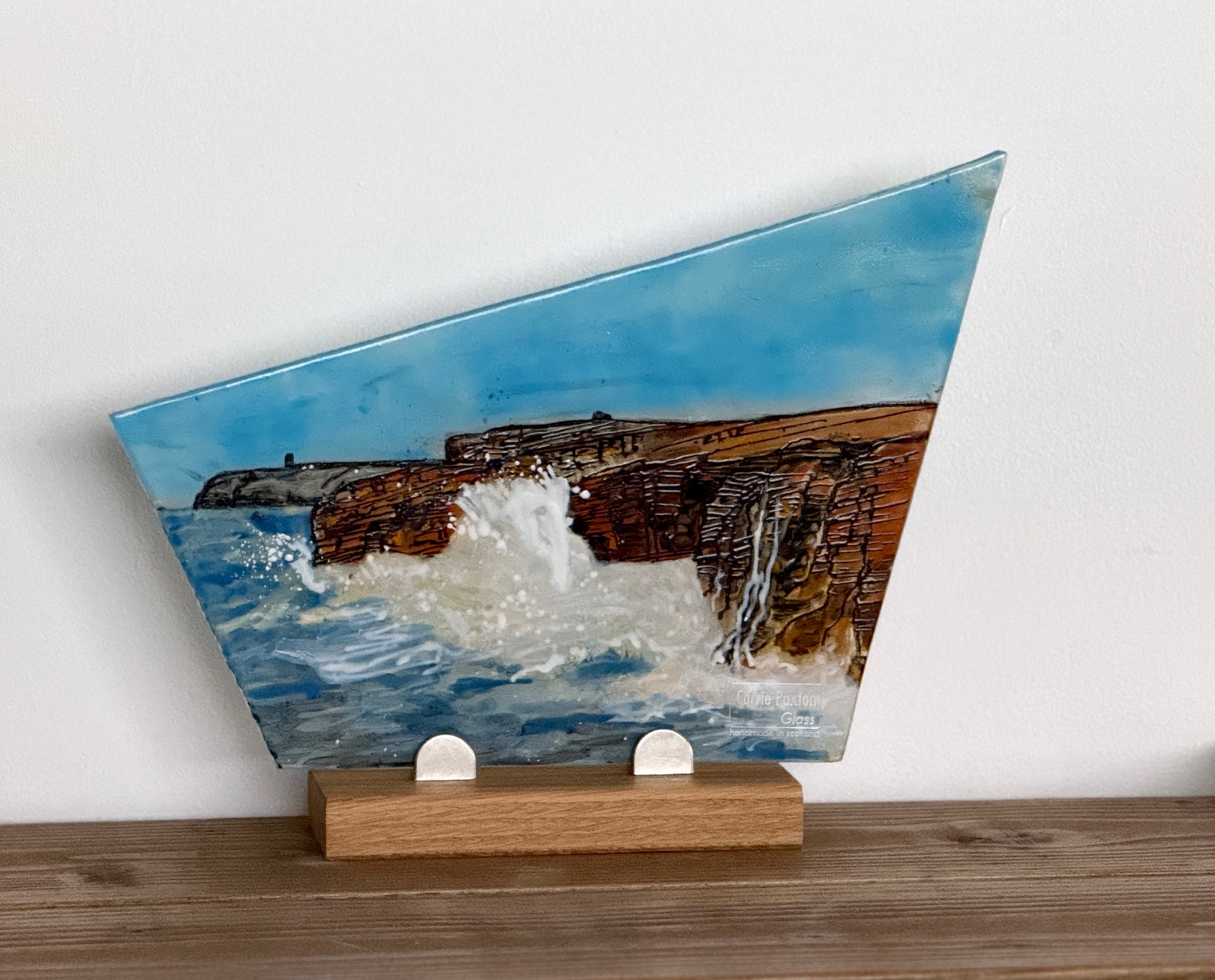
New Shape. This piece depicts the crashing waves at Marwick Head with the Kitchener Memorial at the left, on the horizon.
I made this using clear glass and kiln fired the design with three separate firings over three days.
I fired enamels and silverstain in stages to achieve the dept of colour, detail and texture.
Each piece is individually made for you.
The whole piece measures approximately 31 x 23cm at its widest points and includes the oak base.
I will post the glass detached from the base. Slot the glass centrally onto the base and tighten the screws until it grips. Please don’t over- tighten them as it will break the glass panel.
Here’s what Orkney.com says about Marwick,
A walk up Marwick Head is highly recommended and brings together everything that’s special about Orkney – nature, wildlife, history and fantastic sea views. Found south of Birsay in the West Mainland, this huge headland is part of a spectacular stretch of coastline, snaking down as far as Stromness.
The cliffs here soar nearly 90m out of the Atlantic Ocean. A walk to the top from either Marwick Bay or a small car park at Cumlaquoy offers incredible views and – during the summer months – the chance to see thousands of seabirds swirling in the breeze. Fulmars, guillemots, razorbills, cormorants and kittiwakes all make these crumbling cliffs their home. Marwick Head is also an RSPB reserve and there are often special events held here by the charity.
On a clear day you’ll be able to see the Old Man of Hoy in the distance, and often you’ll spot creel boats below, hauling crab and lobster from the seabed.
The headland is dominated by the Kitchener Memorial, built in 1926 to commemorate WWI Minister for War, Lord Kitchener. He died onboard HMS Hampshire along with 736 men when the ship hit a mine just a few miles offshore from Marwick Head on 5th June, 1916, en-route to Russia. The 48 foot high memorial to Kitchener was restored by the Orkney Heritage Society in 2016, and a new memorial wall built to fully commemorate the crew of HMS Hampshire, as well as those who lost their lives onboard the Laurel Crown whilst minesweeping in the same area on 22nd June 1916.
A visit to Marwick Head is a must when in Orkney, but do be careful when climbing to the top of the headland and never get too close to the edge – the cliffs are fragile and erosion can cause the ground underfoot to be very dangerous.